
In commercial cannabis facilities, humidity control is an important part of environmental management and product quality assurance. From seedlings and flowering plants to harvested material and packaged products, moisture conditions influence contamination risks, consistency, and the condition of the facility itself.
Humidity management is therefore a concern throughout the production cycle—not simply during one stage.
Seedlings and Early Development
The seedling stage marks the beginning of the production cycle. Environmental consistency matters because young plants are sensitive to changes in their surroundings.
From a facility-management perspective, propagation areas require attention to moisture accumulation, surface condensation, and hygiene. Persistent dampness can create conditions that favor microbial growth on building surfaces and equipment.
Humidity control forms part of a broader environmental management program alongside cleanliness, temperature monitoring, and routine inspection.
Vegetative Growth
As plant material increases, the moisture conditions inside a production space can change. A room that previously appeared stable may develop uneven conditions across different areas.
This makes environmental visibility increasingly important. A single room reading may not represent conditions throughout the facility, particularly where layouts, partitions, and equipment create different local environments.
For commercial operators, consistent environmental records help identify recurring moisture problems and support investigations when quality issues arise.
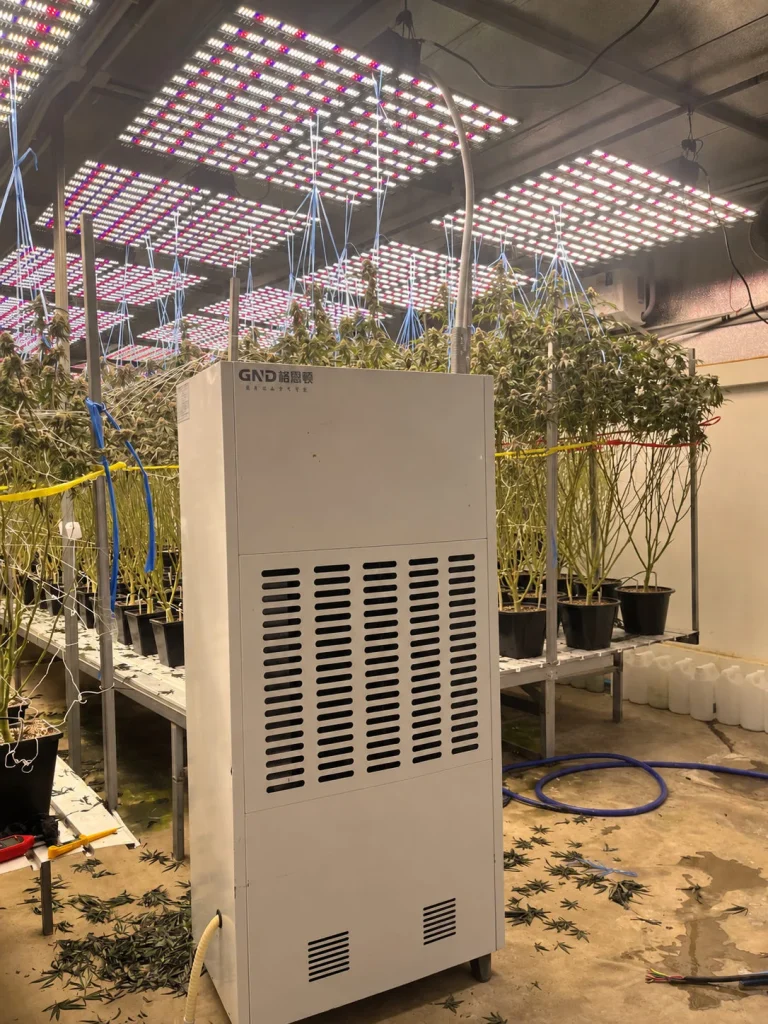
Flowering and Flower Development
Flowering brings greater attention to the condition and quality of the material intended for sale or processing. Moisture-related contamination can affect its appearance, acceptability, and commercial value.
The importance of microbial quality is supported by Health Canada’s research, which identified microbial contamination in dried cannabis samples from both legal and illegal markets. These findings underline the need for quality controls across the production chain.
Humidity management is one component of that approach. It does not replace sanitation, inspection, laboratory testing, or other quality assurance measures.
What About the “Fruiting” Stage?
For an article about commercial cannabis flower production, flower development and maturation are generally more appropriate terms than “fruiting.”
Cannabis can produce seeds, but seed production and harvested flower production are different commercial activities. Keeping this distinction clear helps readers understand which part of the production cycle the article describes.
In either case, environmental management remains relevant to facility hygiene and material quality.
Harvest and Material Handling
Harvest is a transition from living plants to material moving through handling and processing areas. Environmental concerns continue during this transition.
Moisture problems in handling spaces, condensation on surfaces, and damp equipment can undermine hygiene. Moving material between rooms also creates a need for clear quality procedures and traceable records.
Maintaining suitable premises is therefore part of protecting the value of harvested material. Humidity control supports this goal, together with clean handling practices and contamination prevention.
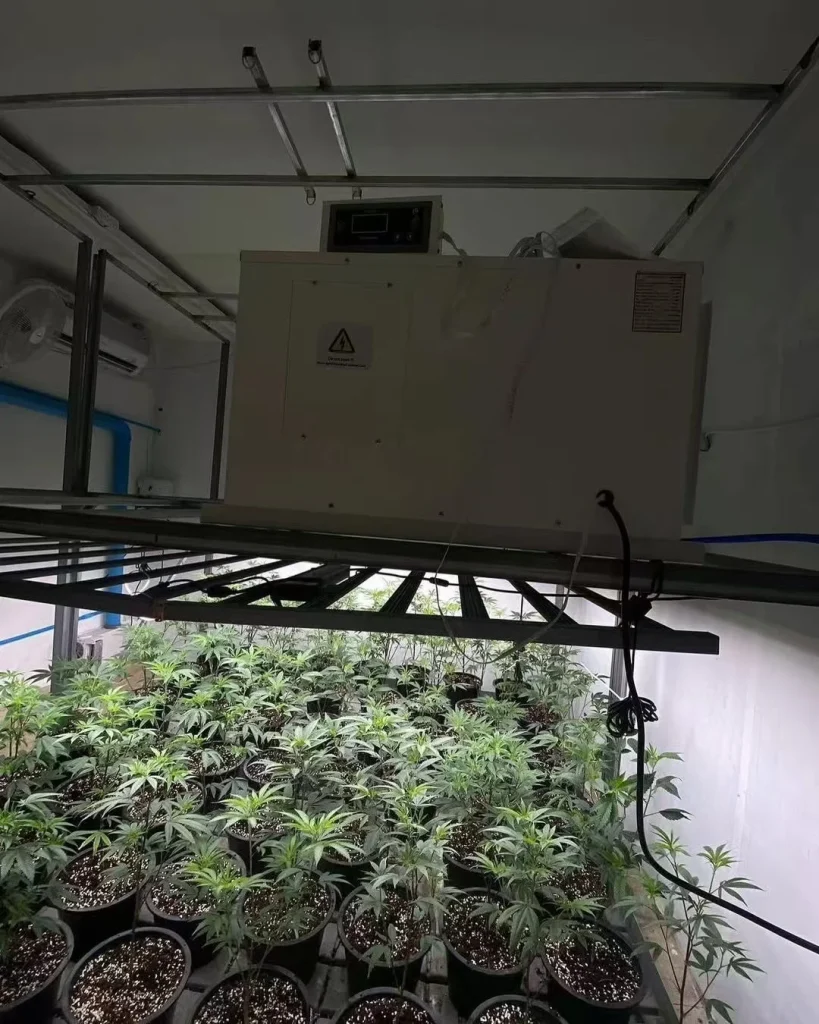
Drying and Post-Harvest Quality
Post-harvest processing is closely connected to the moisture condition of plant material. Variations in that condition can affect consistency and susceptibility to deterioration.
An important distinction is that room humidity and product moisture are different measurements. An environmental reading alone does not establish whether a batch meets its quality specifications.
Post-harvest quality assurance should therefore consider both the surrounding environment and the condition of the product. Environmental equipment supports the process, while product assessment and testing determine whether the material meets applicable requirements.
Storage, Packaging, and Distribution
Humidity remains relevant after processing. Storage environments, packaging integrity, and handling conditions all influence whether products retain their intended condition.
Moisture-related problems can also have consequences beyond an individual batch. Health Canada has published recalls involving dried cannabis flowers that may contain mold, demonstrating the commercial importance of contamination prevention.
Protecting finished products requires a broader quality system. Humidity control contributes to that system, but cannot guarantee product safety or eliminate every source of contamination.
Humidity Control Is a Facility-Wide Investment
For commercial cannabis businesses, humidity management connects several priorities:
- Product quality: supporting consistent environmental conditions.
- Facility protection: addressing persistent dampness and condensation.
- Quality assurance: providing environmental records for review.
- Business continuity: reducing exposure to moisture-related disruption.
- Customer confidence: supporting a disciplined approach to product handling.
Dehumidification, humidification, ventilation, and air conditioning serve different environmental functions. Their role should be considered within the overall design and quality requirements of the facility.
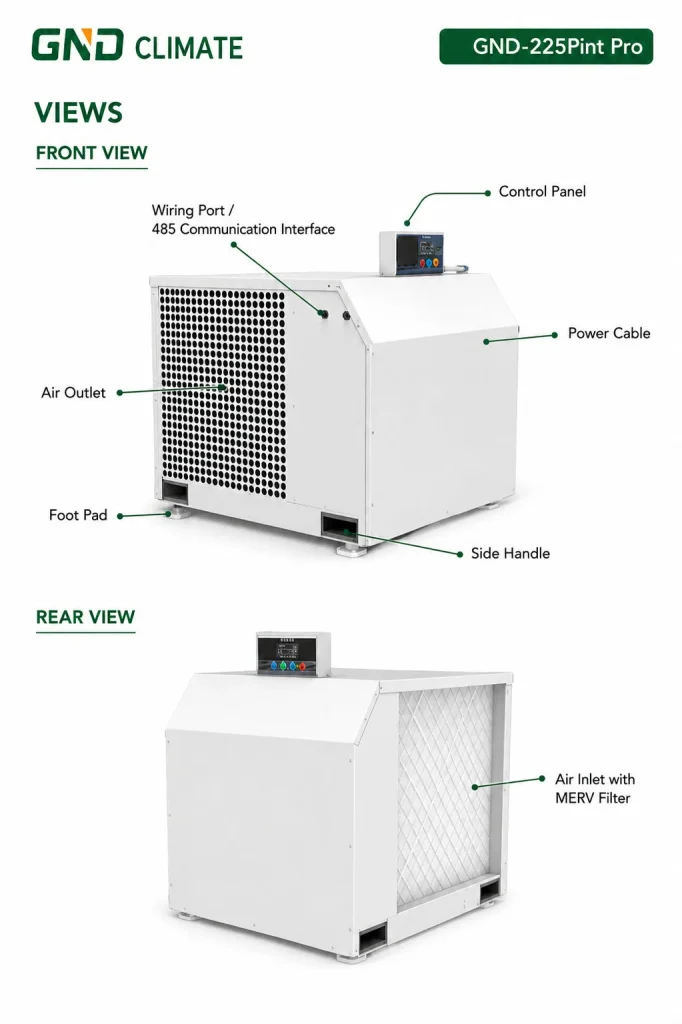
Humidity-Control Equipment from GND Climate
GND Climate manufactures commercial and industrial humidity-control equipment, including floor-standing dehumidifiers, ceiling-mounted dehumidifiers, microchannel dehumidifiers, and humidifiers.
We offer OEM/ODM services, private labeling, and configuration options for equipment distributors and commercial projects.
Looking for a humidity-control equipment partner? Contact GND Climate to discuss your project and available product options.
Website: www.gndclimate.com
WhatsApp: +86 15505816872